
Kabaka Directs His Subjects In Favour of Mpuuga’s Constitutional Overhaul Push
Kampala|FileFactsUg
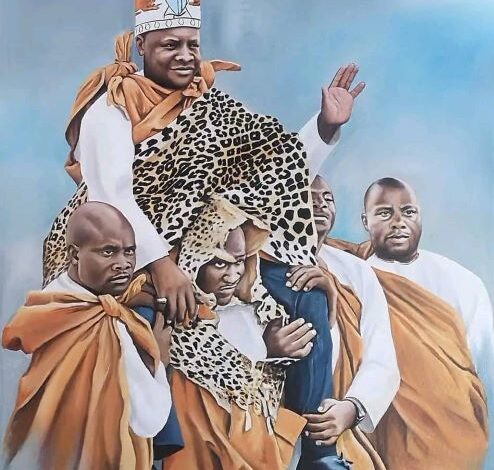
In a momentous move to address the pressing issues of inequality and injustice in Uganda, the Kabaka of Buganda, Ronald Muwenda Mutebi II, has called on his subjects to support Democratic Front (DF) President Mathias Mpuuga in his campaign for a constitutional overhaul.
This directive was made during a message issued on October 26, 2025, in celebration of the centenary (100 years) of St. Mary’s Lubaga Cathedral, where the Kabaka emphasized the urgency of national unity in advocating for reform.
Highlighting the growing concerns of Ugandans, the Kabaka expressed his worries about the increasing injustices and the disproportionate sharing of national resources.
“Time has come for us all to get united and speak with one voice urging those in power and all Ugandans to engage in a national dialogue about the concerns regarding the equal sharing of our national resources,” he stated.
The Kabaka’s call for unity emphasizes the need for all citizens to be involved in addressing these critical issues facing the nation.
This directive closely follows the support expressed by the clergy, particularly the Catholic Church, through a pastoral letter during the Episcopal conference mid-2025.
The Church backed Mpuuga’s push for constitutional and electoral reforms, reinforcing the idea that significant societal changes require collective action from various sectors of society.
Now, the Kabaka’s message resonates with this sentiment, emphasizing the role of dialogue and collaboration.
“It is the time to reconsider making amendments in our constitution to reform major laws governing our country,” the Kabaka proclaimed, stressing the necessity of updating the constitutional framework to better reflect the needs and rights of all Ugandans.
His assertion reflects a growing recognition of the need for legislative change to enhance equality and justice in governance.
In alignment with these sentiments, Mpuuga has proposed a comprehensive list of reforms aimed at revitalizing Uganda’s political system.
Key among these proposals are the amendment of laws allowing Ugandans in the diaspora and prisoners the right to vote, and reducing the size of Parliament from 529 MPs to 295 MPs. These changes are envisioned to streamline governance and make it more representative.
Additional reforms proposed by Mpuuga include the restoration of presidential term limits, providing presidential candidates with a running mate to serve as a deputy president, and introducing a second tier of Parliament with representatives from Uganda’s 39 districts.
Mpuuga’s aim is to create a more balanced governance structure that adequately represents all citizens’ voices.
The directive from the Kabaka is pivotal, signaling a unified stance among various influential stakeholders regarding the current state of democracy in Uganda.
By rallying behind Mpuuga’s reform agenda, the Kabaka enhances the credibility of DF’s push and underscores the urgency for a fairer distribution of resources and representation.
As the Kabaka put it, “we have already embarked on this big task, only we need is more unified voice on this big issue.”
His call to action is a reminder that the pursuit of equality and justice is a collective responsibility, requiring the backing of all Ugandans to bring about meaningful change.
List of DF Reforms;
- Amendment of the law to allow Ugandans in the diaspora and prisoners the right to vote.
- Reducing the size of Parliament from the current 529 MPs to 295 MPs.
- Restoration and entrenchment of presidential term limits.
- Presidential candidates having a running mate who will be the deputy president.
- Introduction of a second tier of Parliament with 39 MPs from the original 39 districts of Uganda. The deputy president will be its head.
- Modification of the structure of the Electoral Commission.
- Rethinking the decentralization model of managing local government.
- Changing the method of declaring presidential election results from a centralized system to the district level.
- Amending the system from first-past-the-post to a proportional representation model to create balance in Parliament.
- Allowing ordinary voters to challenge presidential election results in court.