
Bobi’s Boastful Aspirations Crumble As Candidate Shortage Reveals Weaknesses
Kampala|FileFactsUg
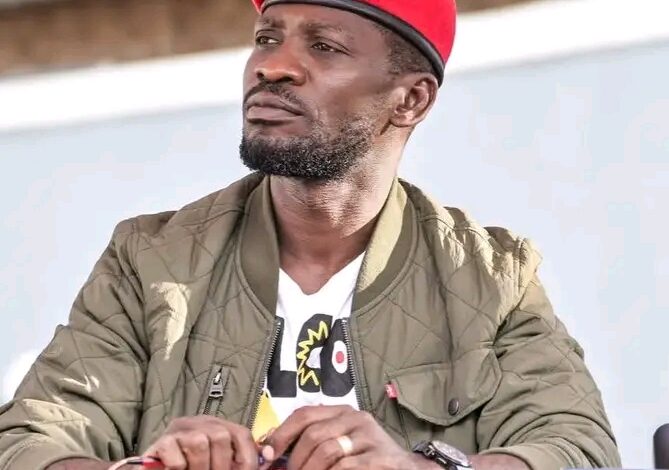
As the political fight of the Country gears up for the upcoming 2026 general elections, the National Unity Platform (NUP), once perceived as a formidable challenger to the long-standing regime of Yoweri Museveni, now finds itself grappling with an unsettling reality, a glaring deficit in their candidate roster.
In a bold, chest-thumping campaign led by party president Robert Kyagulanyi Ssentamu alias Bobi Wine, amplified by his deputy in charge of Buganda Muhammand Muwanga Kivumbi, the imprisoned deputy party spokesperson Alex Waiswa Mufumbiro, among others, the NUP leaders painted an image of invincibility, fervently claiming their party was a robust mass force ready to challenge the status quo without needing alliances with other opposition parties.
Their dismissive rhetoric aimed at other political entities became a defining characteristic of their pre-election posture, asserting that their popularity was a strong enough shield against the deeply entrenched powers of the ruling party.
In the months leading up to candidate nominations, the NUP leadership seemed unwavering in their belief that their grassroots support would allow them to thrive independently.
The trio of Kyagulanyi, Kivumbi, and Mufumbiro, with their loud assertions of strength, effectively silenced the concerns of fellow opposition leaders who openly questioned their capacity to compete without strong working relationships.
It was as if the NUP camp had transformed into an echo chamber, one where doubts and warnings were not just unwelcome, but swiftly crushed by an overzealous confidence that bordered on hubris.
Many believed they had crafted a narrative too strong to be unraveled until the moment of reckoning arrived.
Live TV Debate
During a heated exchange on a live NBS television broadcast, Kira Municipality MP Ibrahim Ssemujju Nganda pushed back against Kivumbi’s bravado. “Honorable Muwanga,” he interjected sharply, addressing Kivumbi directly, “even NUP is struggling to have candidates in the Western region of Uganda where you can hardly see a mere poster of your party’s candidate.”
Ssemujju’s remarks punctuated the air and cut through the bravado, laying bare the cracks in the NUP’s confident facade.
The moment was significant; it highlighted the growing polarization within opposition ranks and foreshadowed the realities that would soon confront the ambitious rhetoric of the NUP leaders.
In a moment of audacity, Kivumbi remained undeterred, doubling down on the party’s supposed popularity.
He boldly proclaimed that they were inundated with applications, allegedly filtering through over 60,000 aspirants, fostering the idea that they were in a privileged position of ensuring only the best would carry the NUP banner in the elections.
At that juncture, Kivumbi confidently dismissed the relevance of what he termed as smaller parties, including the Uganda People’s Congress (UPC) and Ssemujju’s Peoples Front for Transition (PFF), ridiculing their chances of fielding viable candidates.
He taunted, “Look at Akena’s UPC and Ssemujju’s PFF. They will struggle to find anyone interested in holding their flag in the forthcoming 2026 elections.”
It was a moment steeped in bravado, but little did all involved know that reality was soon to hit harder than any campaign slogan.
Reality Hits NUP Hard
However, the NUP’s bravado has since transformed into palpable concern as the realities of candidate nominations sank in.
As the nominations unfolded, it became glaringly clear that Ssemujju’s earlier assertions held weight; the NUP was facing dire shortcomings.
When it came to nominating candidates to participate in forthcoming 2026 elections, out of 499 elective constituencies, the NUP could only manage to field 292 candidates, leaving a staggering 207 constituencies without representation from a party that had claimed dominance.
This underwhelming outcome starkly contrasted with their ruling counterparts in the National Resistance Movement (NRM), who managed to secure candidates in every elective position.
As the NRM leveraged its established political machinery, it emerged unscathed from the candidate selection process, boasting 12 unopposed MPs already.
When factoring in the 10 members of the UPDF in Parliament, the NRM craftily positioned itself with approximately 22 seats reserved even before voting took place.
This stark contrast raises crucial questions about the NUP’s viability; how can a party that struggled to seat candidates expect to outperform their rival in a fiercely competitive general election?
Illustrating the depth of their troubles, in specific regions like Isingiro district, the NUP candidates are not only outnumbered but seemingly inconsequential.
Here, the LCV and all councilors from the NRM are unopposed, reinforcing the painful truth that the NUP is struggling to carve a foothold in traditional strongholds, let alone expand its influence.
With empty promises and hollow bravado now exposed, the NUP is left to contend with the discomforting realization that ambitious declarations do not translate easily into grassroots successes.
The prevailing situation prompts an even deeper inquiry: How does NUP expect to claim victory in the general elections if their candidate count is significantly lower than their major opponents in the NRM?
The scenario becomes even more alarming when considering the implications of a presidential victory with a fragile parliamentary presence. Without a legislative majority, the elected president faces tremendous difficulties in navigating the corridors of power, especially in an assembly legally equipped with the authority to challenge authority, including the removal of the president from office.
As the dust settles on their prior assertions of grandeur, the NUP’s boasting has wilted, revealing a party grappling with the heavy weight of reality.
Once resounding with confidence, the NUP now finds its ambitions tempered, realizing that mere numbers on applications do not equate to electoral victories, especially in an unfriendly environment punctuated by a robust ruling party.
In the face of this formidable opposition, the NUP may find their journey to achieving the change they advocate is fraught with unforeseen challenges and a pressing need for a revision of strategy.