DF Declines Presidential Candidate For 2026 Elections, Focuses on Reforms, Parliamentary, And Local Participation
Kampala|FileFactsUg
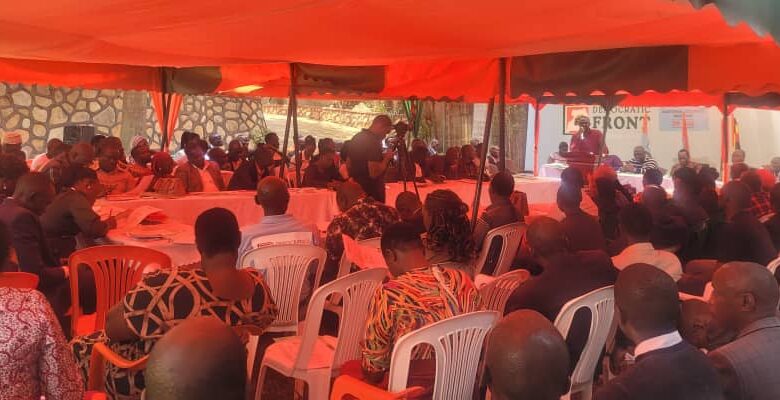
The Democratic Front (DF) National Council has resolved not to field a presidential candidate for the upcoming 2026 general elections.
The decision, made during a meeting held on September 20, 2025, at the party headquarters, stems from a comprehensive evaluation of Uganda’s electoral environment which the council characterized as fundamentally flawed and biased.
The party aims to redirect its efforts toward supporting crucial reforms, participating actively in parliamentary and local government elections, and popularizing its agenda across the nation.
The council’s resolutions reflected deep concerns about the integrity of the electoral process under the current regime, citing the predominance of violence, voter intimidation, and the manipulation of results.
“Elections held under the NRM regime have similar characteristics marred by violence, voter intimidation, bribery, flawed voter registration, and gerrymandering,” the council stated in its resolutions’ communiqué.
They noted that these issues have persisted since 1996, perpetuating a cycle of disillusionment among voters.
During the meeting, the council highlighted that crucial reforms required for a fair electoral process remain unaddressed.
“The country is gearing for the next general election without addressing key electoral reforms,” they explained, emphasizing that no significant changes have been made apart from a limited amendment to the Political Parties and Organizations Act.
Addressing the pressing need for reform, the DF National Council regretted the resistance from both the government and the leading opposition to implementing necessary changes. According to the council, “the manner in which both Government and the leading Opposition Party have resisted, frustrated, and undermined electoral reform calls and attempts” must be confronted head-on.
The council also pointed to critical failings in Uganda’s electoral system, including the role of military and security forces, the flawed declaration of presidential election results, and the lack of transparency in the electoral commission’s operations.
“Public access to the Electoral Commission Results portal and random verification of results remains a big challenge,” they noted, calling for immediate action to address these issues.
In a forward-looking statement, the DF reaffirmed its commitment to a comprehensive reform agenda aiming for a total reset of the country’s socio-economic and political fabric. This includes a smooth transition of power, national reconciliation, and a push for free and verifiable elections.
“We call for a national dialogue aimed at arriving at a new consensus before any consequential election can be conducted,” they added, stressing the importance of broad, inclusive discussions for moving forward.
While deciding not to present a presidential candidate, the council remains steadfast in its strategy to engage in parliamentary and local government elections.
“In order to focus on pro-people legislation, reform, and transition, the DF must ensure influence in the next Parliament,” they stated.
The council pledged substantial support for DF candidates at both levels, recognizing the need to have a voice in legislative matters.
To further its goals, the DF Council resolved to utilize the election period to amplify its reform agenda and strengthen party structures nationwide.
“We will use the process of the general elections to popularize and promote our declared Reform and Transition agenda,” they emphasized, believing that effective grassroots engagement will be key to their future success.
The National Council also reiterated its commitment to holding the government accountable, challenging it to present a clear framework for transition and electoral reform.
They thus called for the introduction of several pivotal bills aimed at establishing a clear path for political transition and reconciliation.
Looking ahead, the council scheduled its next meeting for June 2026 to assess the outcomes of the elections and determine the necessary steps moving forward.