
Now NUP Chiefs Quarrel Over Among’s Revelations On Kivumbi Dealings With Museveni
Kampala|FileFactsUg
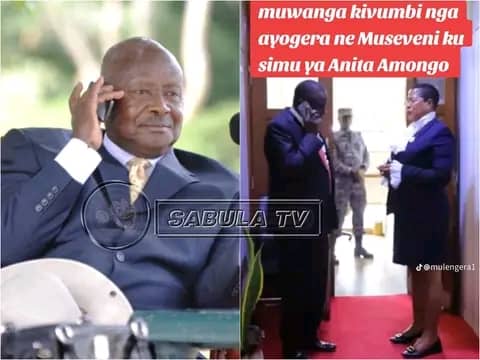
An unexpected confrontation within the National Unity Platform (NUP) unfolded during an impromptu meeting held on December 30, 2025, following Speaker Anita Among’s startling revelations about the party Deputy President in charge of Buganda Muhammad Muwanga Kivumbi’s dealings with President Yoweri Museveni.
The meeting, which was initially called to discuss party matters, quickly escalated into a heated debate over Muwanga’s loyalty following revelations made by the Speaker Of Parliament Anita Among during Museveni’s rally in Butambala on December 29.
“This MP Kivumbi wants to think he has monopoly of abusing President Museveni yet during day time he pretends to be in the opposition, at night he is with us,” Among said in Butambala.
She also informed the crowd in Muwanga’s constituency that their MP advised Museveni on best ways to pass the controversial Coffee Amendment Act which gave Museveni government controlling powers on the cash crop on the floor of Parliament without much resistance.
“When the coffee Bill was brought to Parliament, President Museveni used my phone to talk to Kivumbi and he is the one who advised [the president] on how the bill should be made,” Among revealed, and asked the crowd, “whom should you blame? Kivumbi or the president?”
Stormy meeting
The room was tense as party chiefs, including the three deputy presidents from the Northern, Eastern, and Western regions, the secretary general Lewis Rubongoya, and the national treasurer convened.
As discussions progressed, the general mood among the attendees soured, particularly among the regional deputies who had differing views on Muwanga’s “treachery” practices.
“We cannot allow a snake to live with us in the same house. It will bite us all soon or later, if not already,” fumed a deputy president from the Eastern region, who lost his ambition to become the Leader of Opposition in Parliament (LoP) position to the junior politician Joel Ssenyonyi, a close buddy to party president.
“I have ever been in that NRM, and I no longer want to be near it again either directly or proxies like Muwanga,” the deputy president said with a tough voice.
“The speaker who disclosed his dirty deals with Museveni has for the long time the one behind the buy off of opposition politicians by Museveni, and her biggest hunting ground has been Parliament. So, I believe what she said, about this man whose movements and actions are suspicious, altogether,” the man in his early 60s added.
To conclude his submissions, he stated, “when I saw this man speaking on phone with Museveni over the coffee bill, while standing outside with the speaker instead of putting in a loud tone for all colleagues with whom he was attending a meeting to hear what General Museveni was saying, and responses, I knew there was something fishy being cooked against the coffee which is the main cash crop of my home region considering that we are the only one with a functioning cooperative union whose major activities thrive on the coffee.”
His frustrations echoed the sentiments of his Northern region counterpart, who stated, “I have always suspected intrigue even before that woman [speaker] said anything about him. I was about to raise it, but I said, time will tell itself, and God is good, he has been exposed by the one with whom they deal.”
Both deputies expressed a pressing need to confront Muwanga directly, asserting that his actions warranted immediate scrutiny.
“Muwanga should be summoned in a meeting to justify why he should not relinquish his duties in the party. Otherwise, I feel like that Muwanga is a traitor, working with the state mafias,” declared the Northern region deputy president.
The urgency in her voice reflected a deep concern over potential damage to the party’s integrity if Muwanga remained in his position while suspicions lingered.
Rubongoya Defends Muwanga
As tensions mounted, Secretary General Rubongoya attempted to temper the situation, stating that, “I am a bit concerned with what the speaker said about this our deputy president comrade Muwanga Kivumbi in public without informing us, but I am constrained when it comes to taking any decision because the president is away and busy with campaigns.”
His remarks were aimed at deflecting responsibility, emphasizing that with party President Robert Kyagulanyi alias Bobi Wine actively campaigning, a decision on Muwanga could not be made without the leader’s presence.
The party’s fixer Rubongoya struggled to maintain order amidst rising tempers, stating, “Honourable Muwanga was given his assignment on a purpose which I believe you can all imagine, and he has performed it well, at least to the satisfaction of the president.”
However, his defense of Muwanga only fueled the delegates’ indignation over what they perceived as blind loyalty amidst looming treachery, and thus deputies pressed for the clarity, unhappy with what they perceived as an evasion of the pressing issues raised during the meeting.
“With all due respect, you are sounding evasive on the issues we have raised. The issue we are talking about is deeper than what meets the eyes,” insisted the Eastern region deputy, clearly frustrated by the lack of a decisive stance from the secretary general.
The mounting frustrations turned sharper as the conversation steered back to Muwanga, labeled a “double-colored politician” by insiders of the largest opposition party.
One deputy threatened, “Mr. President [Bobi Wine] should take a decisive action against this double-colored man or we take things in our hands,” highlighting the extent to which the atmosphere in the meeting had become charged with accusations and distrust.
The two deputies remained unimpressed with the secretary general’s rationale, and the frustrations continued.
“By the way, some of us are serious about seeking government power, better tell us if you are just using us to achieve the purposes which you said Muwanga came to accomplish,” demanded the Eastern deputy, demonstrating the growing divide and feelings of betrayal within the party leadership.
As the meeting concluded without resolution, it was evident that divisions within the NUP had widened. “I hate hypocrites,” was all the Northern region deputy could mutter before leaving, summarizing the sentiment among some leaders who felt that the party’s integrity was at stake amid murky alliances and questions of loyalty.
This meeting left residual tension, as the party continues to grapple with its internal dynamics in the wake of revelations that could redefine its future.