NUP Leaders Desperate As New Propaganda Fails To Mask Their Growing Scandals And Public Discontent
Kampala|FileFactsUg
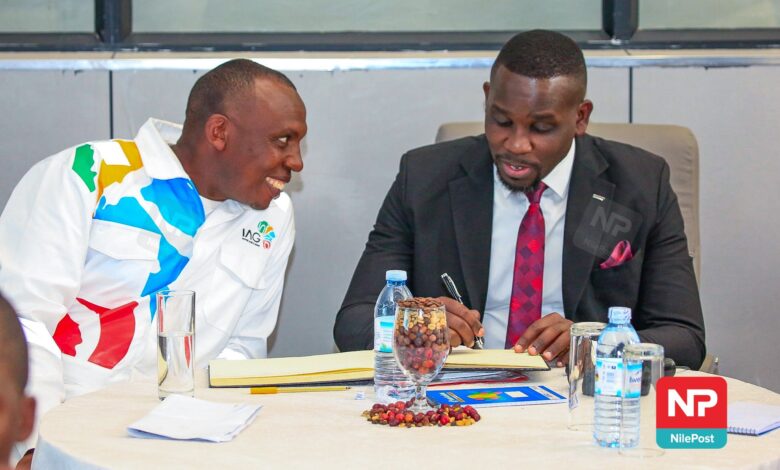
In a bid to regain their dwindling public trust, the National Unity Platform (NUP) and its spokesperson, Joel Ssenyonyi, have resolved to resort to desperate measures to maintain a semblance of relevance in the political arena.
As scandals within the party mount, LoP Ssenyonyi’s media appearance now feel like smoke and mirrors, masking the deeper issues that have come to define the NUP under the weight of public scrutiny.
His current disposition reflects a leader grappling with despair and uncertainty, as the party struggles to make solid and legitimate arguments or rally effective grassroots campaigns amid mounting discontent from their base.
Failure In Parliament
One of the starkest indicators of NUP’s faltering credibility lies in their bad performance in Parliament under Ssenynyi’s reign. Despite Ssenyonyi holding the coveted position of Leader of the Opposition, he has been unable to leverage this role to block or amend crucial legislation yet very detrimental to the public interest.
Laws such as the controversial Coffee Amendment Bill (2024) in which government took control of the coffee sector, the UPDF Amendment Bill (2025), which reinstated military trials for civilians and, the Political Parties and Organisations Bill (2025) which disadvantaged opposition parties, sailed through the legislature without formidable opposition from Ssenyonyi who always directed his peers to storm out even before debating them started.
This failure to employ his position effectively raises eyebrows, leading many to wonder if Ssenyonyi has been complicit in letting these laws pass unchallenged, thereby undermining the very fabric of parliamentary democracy that the NUP claims to champion.
Personal Campain
Simultaneously, Ssenyonyi has been forced to grapple with personal campaign struggles as he attempts to secure his Nakawa West seat. Allegations of financial impropriety have painted a troubling picture, especially with questions surrounding his rapid accumulation of wealth and upscale properties in Najjera, raising suspicions among constituents. The once-ardent supporters of NUP spokesman seem increasingly skeptical of their leader’s ability to represent their interests while facing potential corruption allegations that could jeopardize his political future.
IPOD Cash
Further complicating matters for the NUP leadership is the party’s failure to effectively manage its finances, particularly concerning the contentious Shs22bn in IPOD funds earned from the Government over the last four years.
Accountability issues have left the party financially crippled, resulting in more than 100 candidates being denied nominations during critical elections due to unpaid fees by the party. Additionally, the heinous pattern of extortion targeting the incumbent NUP MPs and the coercive fundraising efforts led by Ssenyonyi on behalf of the party cheifs to fund the campaigns of top officials and personal projects only serve to deepen the corruption narrative that plagues the party. Voters are disillusioned, questioning the integrity of those they hoped would provide an alternative to the status quo.
Failure to offer strategic leadership
Moreover, at a time when strategic leadership is crucial for the change-seeking forces in opposition, the NUP and Ssenyonyi who holds one of the biggest positions in the opposition, but both the party and LoP Ssenyonyi have conspicuously failed to guide in the preparation for the upcoming general elections, which has further compounded their woes.
A glaring inability to offer effective alternatives to the electoral reforms proposed by former LoP Mathias Mpuuga leaves the party exposed. Their rejection of these reforms, paired with inadequate strategies to engage with the Electoral Commission’s introduction of biometric voter machines, highlights their ineffectiveness in fostering a fair electoral environment. This failure to adapt and strategize may cost the party dearly in the next election.
Nakivubo Scandal
Adding to the party’s credibility crisis is the damning Nakivubo Channel scandal, in which top NUP leaders allegedly colluded with councilors led by KCCA Speaker Zahra Luyirika to accept bribes from politically connected business man to award him land in drainage area in Kampala through a resolution of the council meeting on April 3, 2025.
This betrayal not only resulted in devastating flooding that claimed lives and destroyed businesses worth billions but also tarnished the party’s image as an advocate for the urban poor, and zero-tolerance to corruption.
The association of high-ranking NUP officials with greed and corruption raises serious questions about the moral compass of the party leadership, particularly in times of crisis when transparency and accountability are needed the most.
As Ssenyonyi continues to appear in media, desperately trying to redirect public attention from these scandals, one must question the relevance and integrity of the messages he conveys.
It seems misguided for a leader whose party stands on such shaky ground to engage with the media without addressing the myriad of concerns that have eroded public trust. Instead of reinforcing propaganda, one would expect a leader in Ssenyonyi’s position to confront these issues head-on.
The desperation exhibited by Ssenyonyi and the NUP stems from a profound disconnect between their rhetoric and the actual challenges facing the party. Constituents have grown restless, seeking real solutions rather than the hollow reassurances often provided through public statements. This stark contrast is unlikely to go unnoticed as voters evaluate the party’s track record and prepare for the next electoral cycle.
In the grand scheme of Uganda’s political schemes, the NUP must urgently address its internal issues and restore its credibility if it hopes to continue being viewed as a viable alternative to the current regime.
The party desperately needs to regroup and realign itself with the aspirations of its supporters, transforming the current narrative of despair into one of hope and accountability. Until then, their quest for relevance in Uganda’s politics will remain an uphill battle, fraught with uncertainty and public cynicism.