
Ssenyonyi’s Unilateral Walkout On UPDF Bill Sparks New Rift In Opposition Ranks As Mpuuga Sets Record Straight
Kampala|FileFactsUg
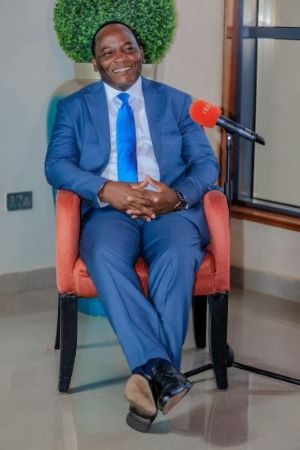
Mathias Mpuuga, the Democratic Alliance (DA) national coordinator, has come forward to clarify the contentious UPDF (Amendment) Bill, 2025, which was passed by Parliament last week without any input from the opposition.
Speaking on NBSTV’s Morning Breeze show on May 26, 2025, Mpuuga revealed that the opposition leadership, led by Joel Ssenyonyi, did not consult with key opposition MPs who worked diligently to draft a minority report.
Mpuuga and fellow MPs Asuman Basalirwa (Bugiri Municipality) and Medard Lubega Sseggona (Busiro East) led a group of 14 MPs in writing the report.
“We were not informed that the leadership of the opposition would walk out. Otherwise, we wouldn’t have spent 24 hours awake trying to do something [minority report] that we thought would provide the House and the nation with an opportunity to consider,” Mpuuga stated.
According to Mpuuga, the team had prepared a comprehensive legal memorandum outlining the negative implications of the bill.
“We had more or less written a legal memorandum on the bill which we thought would have opened the eyes of the entire House on the far-reaching impact of each of the clauses we were going to consider in that bill. Never was,” the parliamentary commissioner remarked.
Mpuuga expressed his disappointment that the opposition leadership failed to consult with them, despite their efforts to contribute meaningfully to the debate.
“If the LoP consulted, then he never consulted any of us who were in the meeting in the Committee, and consultation is his prerogative.”
The Nyendo-Mukungwe MP shared that Sseggona had come to Parliament to deliver hard copies of the minority report for uploading on the parliamentary system, only to discover that the opposition MPs had been ordered out of the parliamentary chambers.
“Probably he [Ssenyonyi] did not find it respectful to inform his team that he was considering the option for over 48 hours before coming to the House because Hon Sseggona moved first ahead of us to come and bring the hard copies for uploading on the parliamentary system, and he informs me, by the time he was walking into the chambers, the team was walking out,” Mpuuga stated.
Mpuuga believes that if Ssenyonyi had given reasoning a chance, the minority report could have influenced some NRM MPs, as it detailed the bill’s negative implications.
“If you took off time, I am very sure a majority of the Honourable members do not actually know what they passed. They thought actually that there was a problem that can only be fixed with that law,” he stated.
The MP asserted that by passing the UPDF amendment bill in its current form, the MPs created a larger problem for the country and the UPDF.
“They [MPs] actually created a bigger problem for the country, including more problems even for the UPDF,” he said.
Mpuuga added that if the opposition had been given the opportunity to clarify their firm position within the minority report, history might have looked different.
“In these kinds of political situations, and the political timetable, and how they also conveniently acted, so that they can survive and have another day to tell as MPs. But if we had the occasion to explain, probably history would have been written differently,” he remarked.
Mpuuga also criticized leaders for oversimplifying the issues with the UPDF legislation, stating that many people lack a proper understanding of the deeper problems with the bill.
“Right now, many people, including probably yourself [moderator], do not have a fair understanding of what actually is deeply amiss with this legislation. We simply say it is wrong, it is bad, it is illegal to try civilians in the court martial… but not deeper issues that we explored.”
Mpuuga’s revelations have raised questions regarding the opposition’s strategy and the future of parliamentary democracy in Uganda.
Key Concerns with the UPDF Bill
According to the minority report, the bill contravenes the Constitution-it violates Article 92, which prohibits Parliament from enacting laws that overturn specific court decisions.
Undermining Separation of Powers—the bill undermines the doctrine of separation of powers and grants the military excessive authority.
Risk of Human Rights Abuses—this law could be used to legitimize abductions, torture, and other abuses by security forces.